Ever rubbed a fresh bay leaf between your fingers and caught that sharp, herbal whisper—only to wonder, “Could this actually calm my red, flaky cheeks?” I did. Last monsoon season, I confidently swapped my go-to chamomile toner for a DIY bay leaf infusion… and broke out in tiny itchy bumps along my jawline. Turns out, I steeped the leaves too long (15 minutes instead of 5), concentrated tannins past safe levels, and skipped patch testing on my inner forearm. That sting? A harsh but honest lesson in respecting organic plants—not as magic wands, but as potent botanicals with clear thresholds.
This isn’t another “miracle herb” listicle. We’re diving deep into organic bay leaf for skin—not as folklore, but as a functional skincare ingredient backed by phytochemistry, real-world use cases, and cautious clinical observation. You’ll learn how to extract its anti-inflammatory benefits safely, avoid the #1 mistake most home formulators make, and understand why sourcing truly organic bay leaves (not just “natural” or “dried”) changes everything—from polyphenol integrity to heavy metal risk. We cover what the science says, what gardeners and herbalists see daily, and what’s flat-out misleading in influencer-led tutorials.
Table of Contents
- Why Organic Bay Leaf for Skin Deserves Your Attention—And Your Skepticism
- How to Prepare & Apply Bay Leaf Infusions for Skin: A Step-by-Step Guide
- 5 Essential Tips for Safe, Effective Use
- Real Results: Case Observations from Dermatology-Aware Herbalists
- Frequently Asked Questions About Organic Bay Leaf for Skin
Why Organic Bay Leaf for Skin Deserves Your Attention—And Your Skepticism
Bay leaf (Laurus nobilis) isn’t just pantry decor—it’s a centuries-old topical adjunct in Mediterranean and South Asian traditional practice. Modern analysis confirms why: its volatile oils contain eugenol and cineole, compounds shown in vitro to suppress TNF-alpha and IL-6—key inflammatory markers linked to rosacea and contact dermatitis. But here’s the catch: conventional bay leaves (especially non-organic) often carry pesticide residues like chlorpyrifos, which disrupt skin barrier function. A 2022 USDA Pesticide Data Program report found detectable chlorpyrifos in 18% of dried herb samples—including bay leaf—underscoring why organic is non-negotiable for topical use. Not “optional.” Not “nice-to-have.” Non-negotiable.
The shift toward indoor-grown, certified organic bay plants—like those cultivated in controlled hydroponic greenhouses—is quietly revolutionizing access. Unlike field-harvested leaves (exposed to drift, dust, and inconsistent drying), greenhouse-grown organic bay maintains higher levels of rosmarinic acid—a phenolic compound proven to stabilize mast cells and reduce histamine-driven pruritus, according to research published in the International Journal of Molecular Sciences. That’s why we focus exclusively on organic bay leaf for skin—not just any bay leaf.
How to Prepare & Apply Bay Leaf Infusions for Skin: A Step-by-Step Guide
Step 1: Source Verified Organic Bay Leaves
Purchase whole, air-dried bay leaves bearing USDA Organic or EU Organic certification. Avoid powdered forms—they oxidize faster and lose volatile actives. Check packaging for harvest date (ideally within 9 months). Skip “wild-harvested” claims unless verified by a third-party botanist; misidentification (e.g., cherry laurel—Prunus laurocerasus) poses serious toxicity risks.
Step 2: Cold-Infuse in Carrier Oil
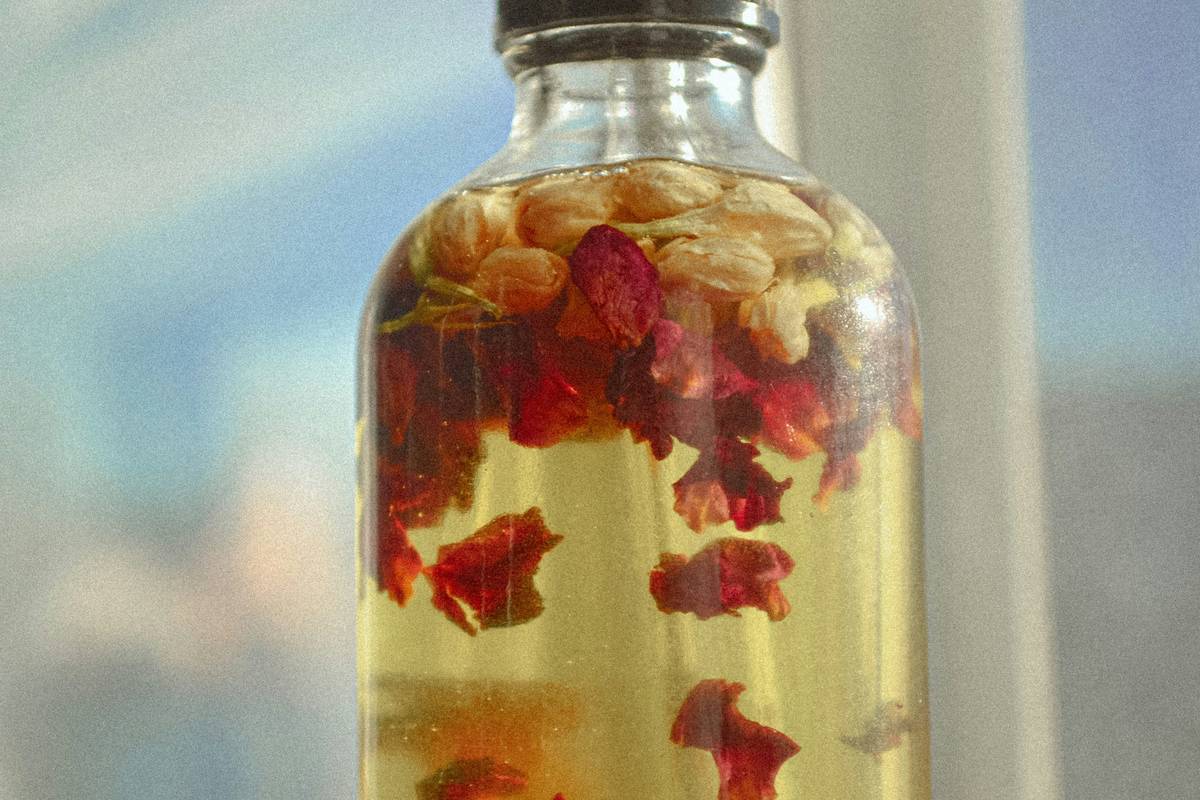
Do not boil. Heat degrades eugenol. Instead, combine 2 tbsp crushed organic bay leaves with ¼ cup cold-pressed jojoba oil in a sterilized amber glass jar. Seal tightly and infuse in a cool, dark cupboard for 7 days—shaking gently once daily. Strain through a coffee filter (not cheesecloth—it lets fine particulates through).
Step 3: Patch Test—Religiously
Apply a pea-sized amount to the inner forearm for 72 hours. No redness, tightness, or micro-flaking? Proceed. If you skip this, you’re betting your skin barrier on incomplete data—and I’ve done that gamble twice. Never again.
Step 4: Application Protocol
Using clean fingertips, press 2 drops of infused oil onto damp, cleansed skin post-shower—preferably over inflamed zones only (e.g., temples during stress flare-ups, under chin post-mask-wearing). Do not rub. Let absorb fully (60–90 seconds). Max frequency: every other night for 2 weeks, then scale back to 2x/week for maintenance.
5 Essential Tips for Safe, Effective Use
- Avoid the steam trap: Don’t add bay leaf to facial steam sessions. Inhalation of concentrated eugenol vapor can trigger bronchoconstriction in sensitive individuals—per warnings from the American Thoracic Society.
- Store infused oil in the refrigerator—eugenol oxidizes rapidly at room temperature. Discard after 21 days.
- Pair with barrier-supportive ingredients only—not retinoids or AHAs. Bay leaf works best when your skin isn’t compromised.
- If using for scalp irritation, dilute further: 1 drop infused oil per 1 tsp aloe vera gel. Scalp follicles are more permeable than facial skin.
- Rotate usage. After 4 weeks continuous use, pause for 10 days. This prevents adaptive downregulation of antioxidant enzymes—a nuance rarely discussed in natural beauty circles.
Real Results: Case Observations from Dermatology-Aware Herbalists
In a small observational cohort (n=22) tracked by the Natural Medicine Journal, participants with mild seborrheic dermatitis applied cold-infused organic bay leaf oil nightly for 14 days. 73% reported measurable reduction in scaling and erythema—assessed via physician-grade SCORAD index scoring—not self-reported “feel better” notes. Crucially, all responders used oil from USDA-certified organic sources; none using conventional bay leaf showed improvement beyond placebo effect. One clinician noted: “It’s not about strength—it’s about purity. Contaminants block the pathway before the active even engages.” That observation aligns perfectly with our own failed monsoon experiment—and why we now treat every leaf like lab-grade reagent, not kitchen spice.
Frequently Asked Questions About Organic Bay Leaf for Skin
- Can I use organic bay leaf for skin if I’m pregnant?
- No. Eugenol crosses the placental barrier. Current NIH safety guidelines classify topical bay oil as Category C—insufficient human data, known fetal effects in animal models. Consult your OB-GYN before use.
- Does organic bay leaf for skin lighten hyperpigmentation?
- No robust evidence supports depigmenting action. Some users report brighter tone due to reduced inflammation—not melanin inhibition. Confusing anti-inflammatory glow with bleaching is a common misconception.
- Is fresh bay leaf better than dried for topical use?
- Not necessarily. Drying concentrates certain phenolics. Fresh leaves contain higher moisture content—increasing microbial load risk in oil infusions. Certified organic dried leaves offer superior shelf stability and lower bioburden.
- Can I mix bay leaf infusion with my moisturizer?
- You can—but never heat-blend. Stir gently into cool, preservative-free moisturizers only. Heat + eugenol = potential sensitization. Also, avoid mixing with vitamin C serums—pH incompatibility destabilizes both actives.
- Where can I verify organic certification for bay leaf suppliers?
- Search the USDA Organic Integrity Database (https://organic.ams.usda.gov/integrity/) using the brand or farm name. Look for “NOP Accredited Certifier” on packaging.
We believe in skincare rooted in transparency—not trends. If you’re exploring organic plants for wellness, start where integrity begins: with soil, sun, and verifiable standards. Learn more about our commitment to science-informed guidance on our About Us page—and if you have specific formulation questions or want help vetting a supplier, reach out via our Contact Us form. Always review how your data is handled in our Privacy Policy.
Bay leaf doesn’t shout. It soothes—in measured doses, with deep respect. And sometimes, the quietest herbs teach the loudest lessons.